
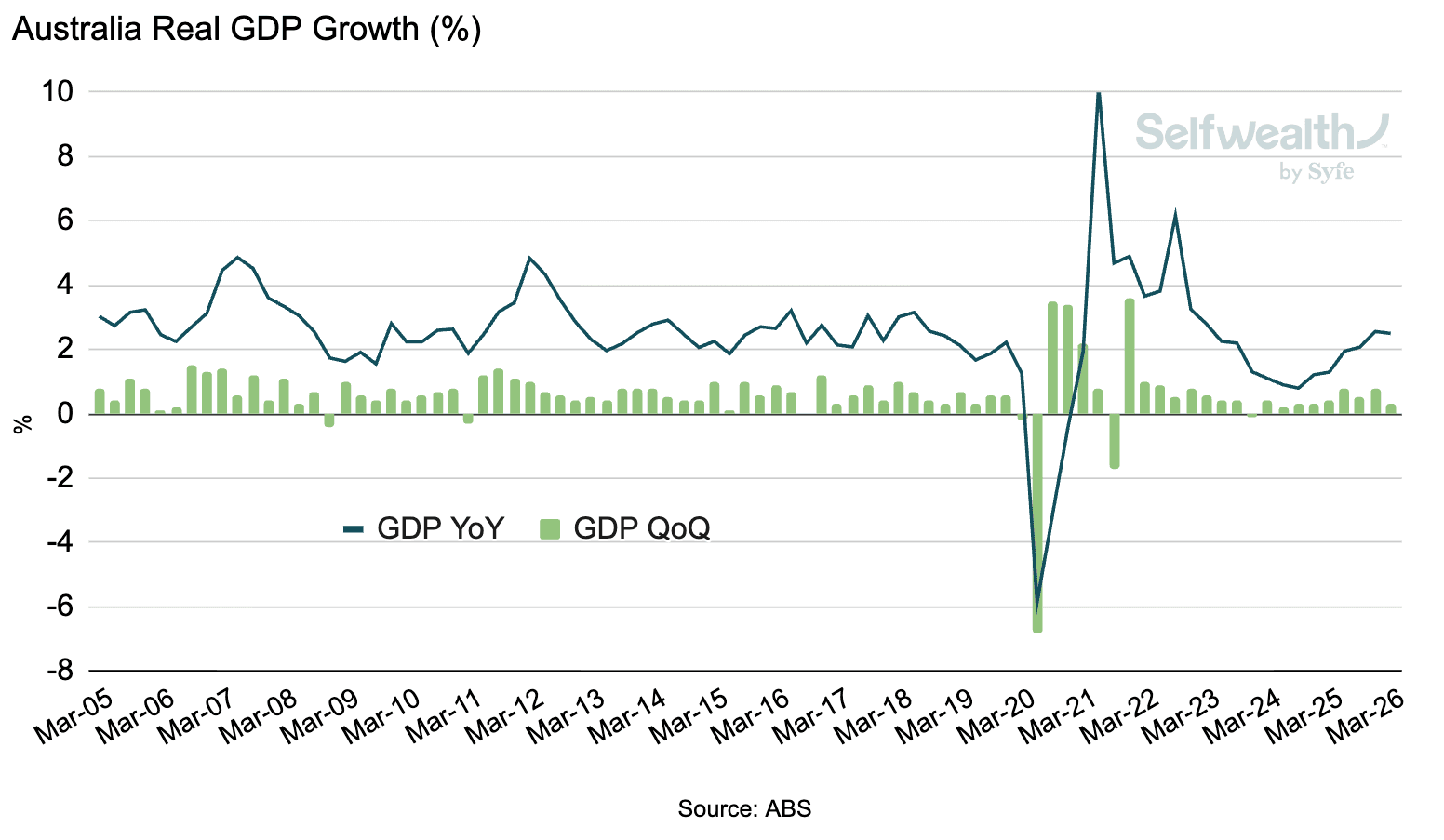
Wednesday's GDP release confirmed the Australian economy grew 0.3% in the March quarter 2026, and 2.5% over the year.
But strip out AI-driven data centre investment and the underlying story is considerably thinner.
Growth per person went backwards, household budgets remain stretched, and a new wages decision has potentially raised the stakes for the RBA's rate path.
Key Takeaways
Australia's economy remained positive with 0.3% in Q1 2026 and 2.5% over the year, but GDP per capita declined for the quarter and productivity also went backwards
Data centre machinery investment drove virtually all of the quarter's growth; without it, the remaining components of the economy roughly netted to zero
Earlier this week Fair Work Commission awarded a 6% national minimum wage increase, adding upward pressure to inflation and keeping a potential RBA hike this year on the table
Bond yields have eased slightly from last week's spike while equities continue to rally, with ASX Materials and AI-driven US tech stocks leading gains
Australia's GDP The Headline & What's Behind it
GDP grew a steady 0.3% in Q1 2026, a step down from the 0.9% quarterly growth recorded in December 2025. The economy is growing, but it's doing so unevenly.
Investment was the largest contributor at +0.7%, and virtually all of it came from a single line item: machinery and equipment. The ABS identified this as business investment in data centres, concentrated in NSW and Victoria, with imports of automatic data processing equipment surging 85.7% in the quarter to meet that demand.
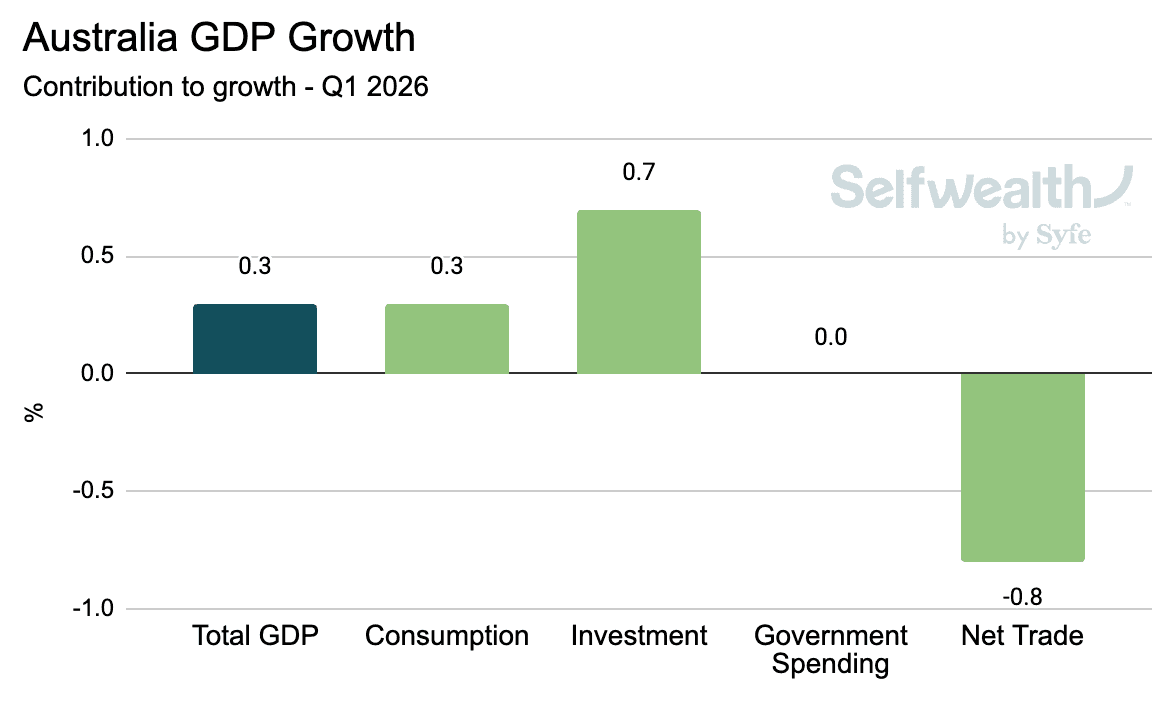
That import surge is the catch. Because the bulk of those assets were sourced offshore, net trade subtracted 0.8%, almost exactly offsetting the investment gain. Without the data centre effect on both sides of the ledger, there would have been very little growth at all.
Household consumption grew 0.5%, though the rise was largely driven by higher electricity and fuel costs after government energy rebates expired rather than a genuine lift in discretionary spending, which rose just 0.1%. GDP per capita dipped again this quarter, in part reflecting the pace of population growth, and productivity also declined. The household saving ratio edged down from 7.0% to 6.2%, suggesting households are drawing on accumulated buffers to maintain spending levels.
Interest Rates: Not Out of the Woods Yet
As we explored in last week's piece on inflation, the RBA has already delivered multiple rate hikes this cycle, with inflation still above target. This week's GDP print likely won’t change the RBA waiting stance. The focus remains on whether rate hikes to date are doing enough on inflation.
A big development this week came from the Fair Work Commission, which handed down a 6% increase to the national minimum wage. That decision flows through to a 4.75% increase on award wages covering a significant share of the retail, hospitality, healthcare, and construction workforce. At the margin, the decision adds to the RBA's inflation challenge. Markets are currently pricing a potential hike by year-end as a live possibility.
The RBA's next meeting is June 16. No move is expected, but the statement will be closely read for any language shift following the wage decision.
Markets: Yields Cool, Equities Push Higher
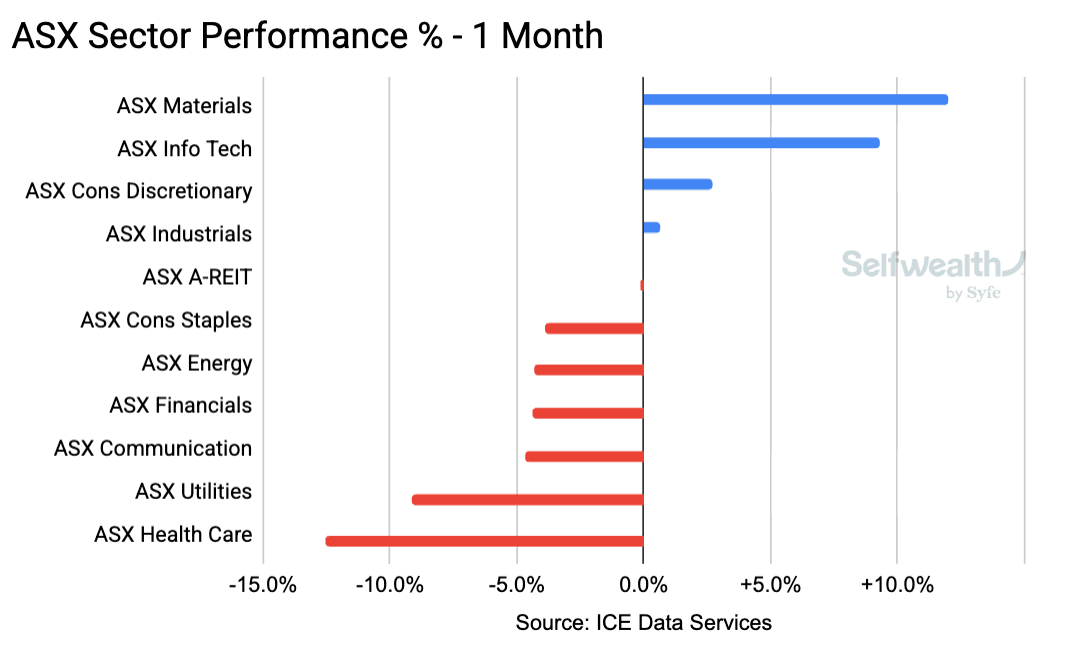
Last week we noted a divergence in bond yields spiking alongside record equity markets. Since then, yields have pulled back modestly from their recent highs, providing some breathing room. But equities have continued to push higher, particularly in AI-driven US technology stocks.
In Australia, the materials and technology sectors have been the standout performers. The pattern reflects a market increasingly rewarding commodity and AI-exposed names, the same data centre investment theme that dominated the GDP release is visible in equity market returns. Defensive and rate-sensitive sectors continue to face headwinds.
What We're Keeping an Eye on
US Jobs data — June 5: Labour market strength is the key input for Federal Reserve rate expectations and the AUD/USD dynamic
US Inflation — June 10: A surprise to the upside would sharpen the global rates debate and could pressure equities
SpaceX IPO - June 12: SpaceX is targeting its highly anticipated initial public offering (IPO) for June 12, 2026,
RBA Meeting — June 16: No move expected, but the post-meeting statement will be closely read following the minimum wage decision
Important disclaimer: SelfWealth Pty Ltd ABN 52 154 324 428 (“Selfwealth”) (AFSL 421789). The information contained on this website is general in nature and does not take into account your personal situation. You should consider whether the information is appropriate to your needs, and where appropriate, seek professional advice from a financial adviser and/or accountant. Taxation, legal and other matters referred to on this website are of a general nature only and should not be relied upon in place of appropriate professional advice. You should obtain the relevant Product Disclosure Statement for any product mentioned and consider its contents before making any decision.
Most Recent Articles