Roger Ruzzier
As markets move further towards the back half of the calendar year, investors are navigating an environment shaped by evolving geopolitical developments, shifting interest rate expectations, persistent inflationary pressures, and periods of heightened market volatility.
In such conditions, taking the time to revisit and reflect on key insights from previous Selfwealth Live – Technical Analysis Edition sessions can provide valuable context. These learnings may assist investors in refining their approach and supporting more informed, disciplined decision-making.
It has now been approximately 3 years since the launch of Selfwealth Live – Technical Analysis Edition. At its inception, Selfwealth’s educational content was strongly focused on foundational topics such as fundamental analysis and exchange-traded funds (ETFs), catering primarily to long-term, passive investors. However, this left a growing segment of active investors seeking more tailored insights, particularly those interested in managing individual equities and taking a more hands-on approach to their portfolios.
In my role as a Senior Relationship Manager at Selfwealth, I regularly engaged with a diverse range of clients, including high-net-worth individuals and active traders. Many expressed a desire for deeper education around managing positions over shorter- to medium-term timeframes. While there was extensive information available on stock selection through corporate financial analysis, there was comparatively less emphasis on practical frameworks for trade execution, specifically, identifying entry and exit points using price action and chart-based analysis. This gap ultimately led to the development of Selfwealth Live – Technical Analysis Edition.
Since its introduction, the series has received consistent and constructive feedback from the Selfwealth community. One of the key observations has been that, regardless of whether an investor relies on fundamental data, technical patterns, or a combination of both, there are several core principles that remain broadly relevant.
Here I’ve compiled seven key lessons from the series, shared over time, as general educational insights that may benefit investors of all styles and experience levels.
1. Understanding the Role of Technical Analysis in Market Assessment
Technical analysis does not attempt to predict the future. Instead, it seeks to:
Identify current market conditions
Assess probable scenarios
Manage risk and reward asymmetry
Rather than forecasting where prices “should” go, technical analysis focuses on what price is actually doing. This distinction is critical, particularly during periods of heightened market commentary or pessimistic headlines.
Trends Matter More Than Predictions
One of the clearest lessons has been the importance of respecting the prevailing market trend rather than attempting to predict turning points.
Both Australian and US equity markets experienced periods of volatility, consolidation, and uncertainty. However, despite these fluctuations, the dominant long-term trend in major indices remains upwards over the last decade if you look at any chart.
Investors who aligned their portfolios with this trend and avoided overreacting to short-term pullbacks were generally better positioned than those attempting to forecast market tops or bottoms.
Remaining focused on price structure, rather than headlines or forecasts, can help investors avoid unnecessary portfolio churn.
During a Trend, Let Profits Run, Until The Trend Bends
One of the more challenging disciplines for investors is allowing profitable positions sufficient room to develop. Many strong trends experience pullbacks of 20-30% or more before resuming higher. Exiting too early can limit the impact of a stock that ultimately delivers outsized returns.
Of course that doesn’t mean you have to stay in a stock beyond that. At some point you should have a pre-defined exit level, if the trend has turned into a bearish structure.
Wide trailing stops, aligned with the stock’s volatility and trend structure, can help investors remain invested while still controlling risk. This approach shifts the focus from short-term price fluctuations to the overall health of the trend.
Strong trends often require patience. Structured exit rules can help investors participate in longer-term upside without excessive emotional decision-making.
2. Risk Management Comes Before Returns
A consistent theme throughout our discussions was that successful market participation is less about maximising gains and more about controlling losses. Risk management is positioned as the foundation of any trading or investment approach.
Key principles discussed include:
Defining risk before entering a position
Avoiding over‑concentration in single assets or sectors
Accepting that losses are a normal part of market participation
From an education standpoint, this reinforces that no strategy can eliminate risk entirely, and capital preservation should always be prioritised.
Before entering any position, investors should first consider:
What is the potential downside?
Where would the position be exited if the thesis fails?
Does the potential reward justify the risk?
Large portfolio drawdowns are often the result of holding onto underperforming positions for too long, rather than accepting smaller losses early.
Stocks that fall into sustained downtrends rarely recover quickly. Without predefined exit rules, investors risk tying up capital in positions that continue to deteriorate, while missing opportunities elsewhere.
Conversely, no system is perfect. Occasionally, a stock may recover strongly after an investor has exited. While this can be frustrating, a consistent approach to risk management helps protect capital over the long term and avoids catastrophic losses.
Planning for the possibility of being wrong is essential. Managing downside risk is just as important as identifying opportunities. In fact it’s the most important part of managing a portfolio, that is, protecting your hard earned capital.
Markets will continue to cycle through periods of expansion, consolidation, and contraction. While no one can control market outcomes, investors can control their process, discipline, and exposure to risk.
3. Markets Move in Cycles, Not Straight Lines
Financial markets are constantly evolving, shaped by economic cycles, investor psychology, and global events. For traders and long‑term investors alike, reviewing recent market behaviour provides valuable insight into how risk, opportunity, and discipline interact in real‑world conditions.
One of the most important lessons is that markets rarely move in a smooth or predictable fashion. Periods of strong performance are often followed by consolidation, volatility, or pullbacks. Understanding this cyclical nature helps investors avoid over‑reacting to short‑term price movements.
From an educational perspective, recognising cycles encourages:
More realistic return expectations
Better timing discipline
Reduced emotional decision‑making during volatile periods
Rather than attempting to predict exact market tops or bottoms, many experienced participants focus on managing exposure as conditions change.
Understanding Market Cycles: Consolidation Is Normal
A recurring theme is the frustration that many investors experience during prolonged sideways markets. When viewed on longer-term charts, however, these conditions are not unusual.
Historically, strong market advances are often followed by extended consolidation phases. These periods can last years rather than months and are characterised by:
Reduced trending behaviour
Increased volatility and false breakouts
More frequent whipsaws for short-term traders
While uncomfortable, these phases are part of normal market structure. Importantly, they tend to resolve over time, eventually transitioning into new trending phases.
Taking a longer-term perspective, such as reviewing daily or weekly charts, can help investors avoid becoming overly reactive to short-term noise.
4. Volatility Is a Feature, Not a Flaw
Volatility is frequently perceived as risk, but it is also the mechanism through which opportunity is created. Volatility is generally associated with down turns in the market, but that sudden price movements, while uncomfortable, are a normal part of market behaviour.
For traders, volatility can present tactical opportunities when combined with clear risk controls. For longer‑term investors, volatility can test conviction and highlight the importance of portfolio diversification and time horizon alignment.
Educational takeaway:
Volatility should be planned for, not feared
Position sizing and diversification are critical tools
Risk management matters more than prediction
Market volatility can create uncertainty, but it also reinforces the value of having a clear investment framework. By focusing on price action, maintaining defined risk parameters, and avoiding reactive decision-making, investors can better navigate changing conditions.
5. Technical Levels Reflect Market Psychology
Each week we commonly see how widely observed price levels can influence market behaviour. Support/demand and resistance/supply zones, trend structures, and volume are often interpreted as visual representations of collective investor psychology.
When used appropriately the technical levels or zones can assist with:
Identifying areas of increased market interest
Planning entry and exit levels
Structuring trades with defined risk parameters
The “Sliding Scale” of Market Conditions
Market environments are not binary. Instead, they can be viewed as a continuum:
Favourable conditions (bullish trends)
Transitional phases (range-bound or volatile markets)
Deteriorating conditions (bearish trends)
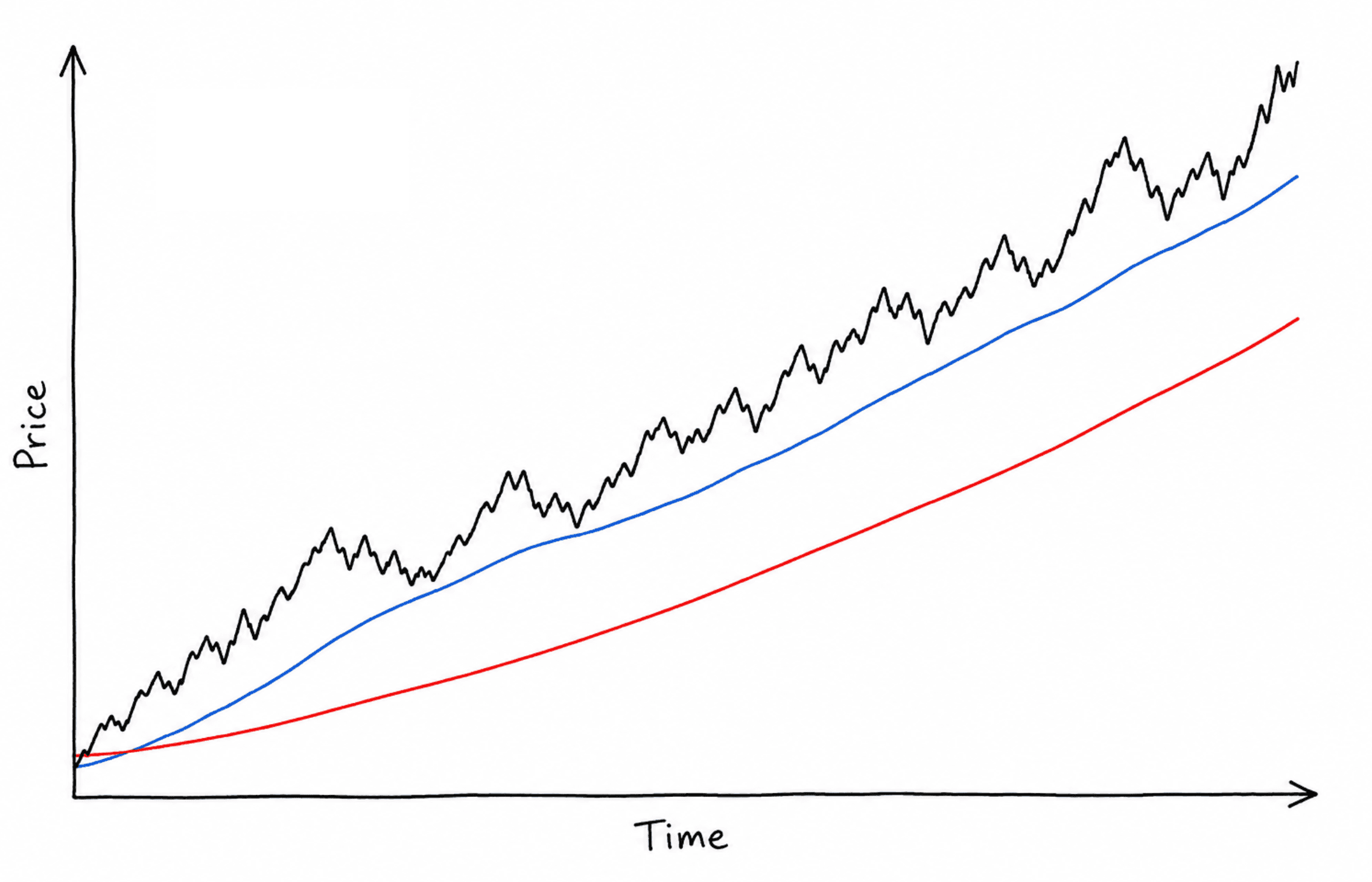
A true bullish structure typically develops over time and is characterised by:
A structural shift from bearish to bullish conditions
Sustained trading above rising moving averages
Periods of consolidation followed by secondary upward moves
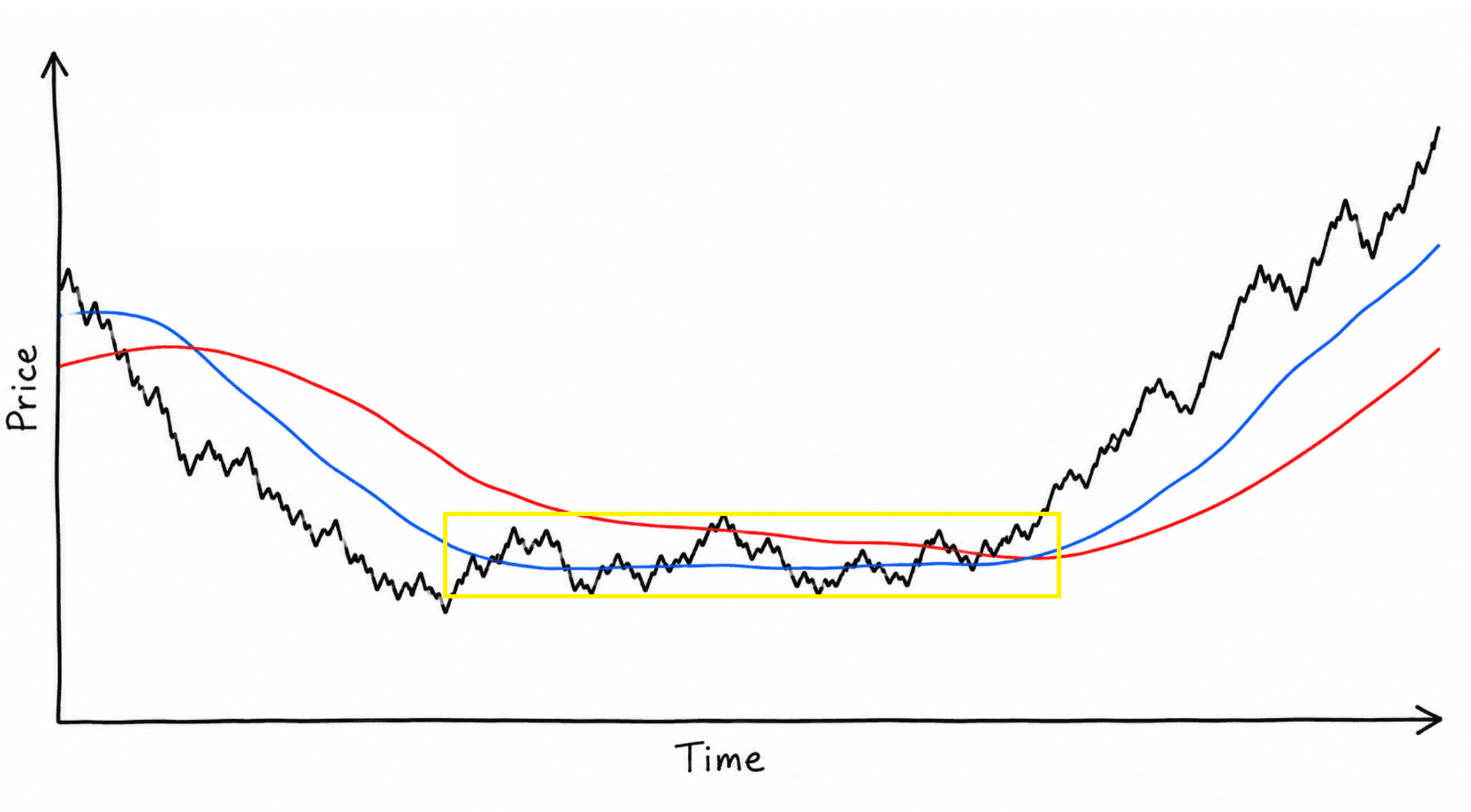
A true range-bound structure typically develops over time and is characterised by:
A structural shift which shows volatility between both bulls and bears.
Sustained trading oscillating above and below sideways moving averages
Periods of tightening or expanding price action followed by a break to either the downside or the upside.
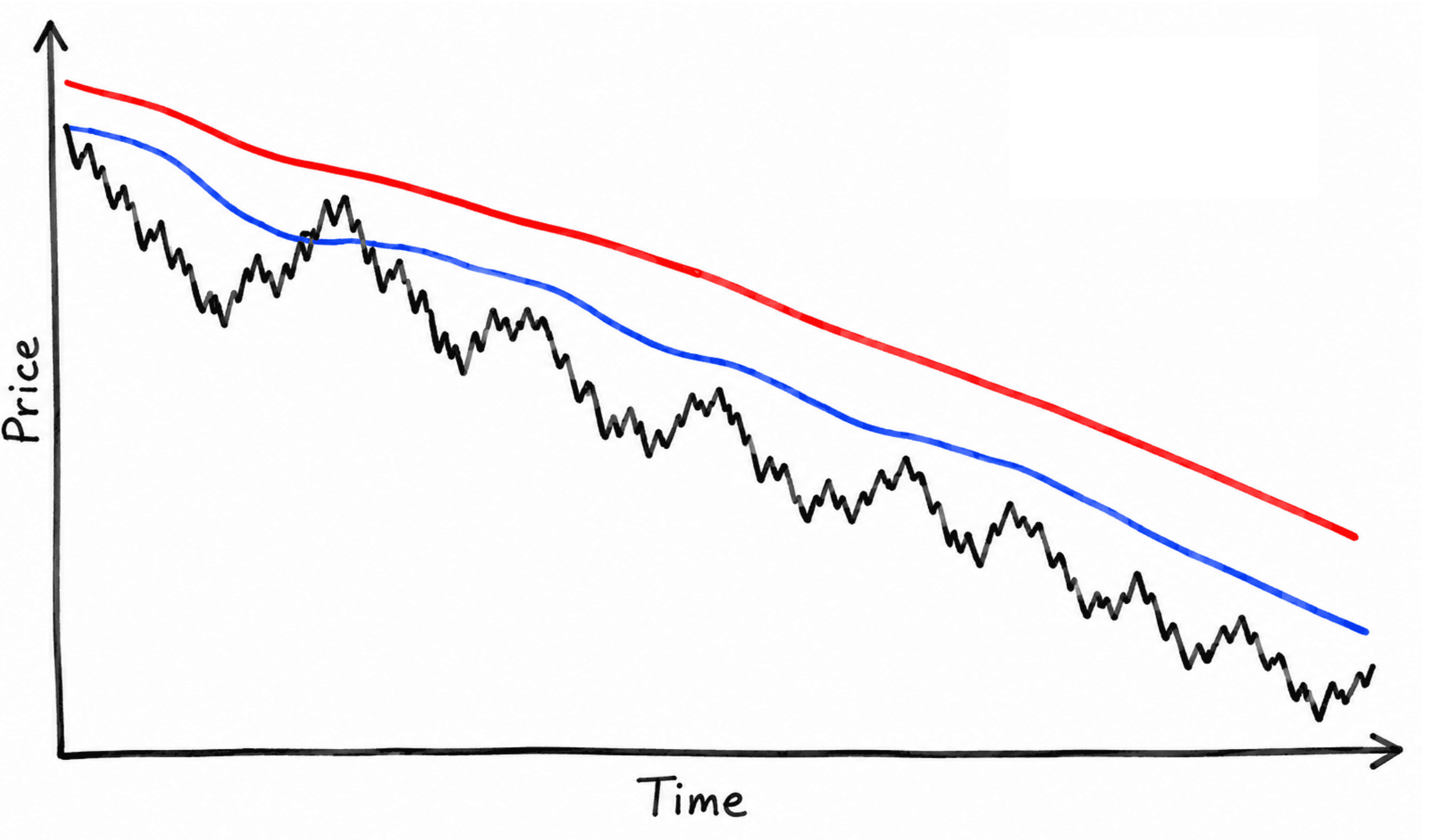
A true bearish structure typically develops over time and is characterised by:
A structural shift from bullish to bearish conditions
Sustained trading below declining moving averages
Periods of consolidation followed by secondary downward moves
Importantly, these tools are not predictive guarantees. Instead, they provide a framework for analysing probabilities and planning scenarios.
Understanding this very simple concept of how to identify where markets are within their cycle and when the market structure changes between the cycles on a price chart can fundamentally make you a much more informed investor.
6. Behavioural Discipline Is a Competitive Advantage
Emotional responses such as fear, greed, and overconfidence are recurring challenges for market participants. Our discussions have highlighted that many poor outcomes stem not from a lack of information, but from inconsistent execution.
Educational insights include:
The importance of having a written plan
Avoiding reactive decisions driven by headlines
Reviewing outcomes objectively rather than emotionally
Maintaining discipline over time is often more difficult than learning technical concepts, yet it remains one of the most important differentiators between those that stay in the game long term and those that don’t.
The Key is to Keep the Process Simple and Repeatable
Complex strategies and excessive indicators do not necessarily lead to better outcomes. In many cases, simple, repeatable processes prove more robust over time.
A clear framework — covering position sizing, entry criteria, exit rules, and portfolio diversification — can help reduce emotional decision-making and improve consistency.
Importantly, simplicity also makes it easier to review results and refine an approach over time.
Equally important is filtering out noise. Markets generate a constant flow of opinions, forecasts, and “high-conviction” ideas. Staying anchored to a personal process can help investors remain objective when sentiment shifts.
Simplicity supports consistency and behavioural discipline. A clear, rules-based approach can be easier to follow through different market conditions.
7. Opportunity Often Exists Beyond Large-Cap Stocks
While large-cap stocks and headline indices receive most of the attention, many of the strongest individual stock performers can also come from outside the major benchmarks.
Mid-cap and emerging companies, often less widely followed, can experience strong momentum when their business outlook improves or when institutional interest begins to build.
Importantly, this does not mean speculating in illiquid or highly volatile micro-caps. Liquidity, trading volume, and risk management remain essential considerations.
Diversifying beyond the largest stocks can help investors access different sources of return, particularly during periods when major indices are consolidating, which as we have discovered above is just a normal and regularly occurring cycle of any market.
Some of the market’s strongest trends can emerge outside the most widely followed stocks, provided liquidity and risk controls are respected.
The key question is, how do you identify them?
Our weekly Selfwealth Live - Technical Analysis Edition show reviews stocks submitted by the audience and walks you through how to analyse them using the charts. If you have a stock you would like us to review then we’d be happy to check it out. And if you’re looking for ideas, then that is where you might be able to find some of the opportunities that you may have never heard of before too.
If that sounds valuable, we’d love for you to join us, live every Tuesday at 12pm. Be sure to join the discussion, watch or subscribe here on our YouTube channel.
Conclusion: Education Is an Ongoing Process
Markets change, and strategies that work in one environment may be less effective in another. Continuous learning, review, and adaptation are essential for both traders and investors.
Our videos have always reinforced the value of:
Reviewing past market periods for lessons
Staying informed without over‑trading
Understanding the limitations of any single approach
And the importance of a repeatable process;
A consistent and repeatable investment or trading process should be:
Clearly defined
Understandable to the investor within minutes
Based on observable market data
Whether an investor follows a technical, fundamental, or blended approach, having predefined entry, exit, and risk parameters is essential.
No approach is immune to losses, but disciplined processes help ensure losses remain manageable while allowing successful positions to contribute meaningfully to long-term returns.
While every year presents different market conditions, recurring behavioural and structural themes often emerge. With that in mind, the key lessons outlined above emphasise that sustainable market participation is built on risk awareness, discipline, and realistic expectations.
These concepts are relevant for active investors navigating Australian and global equity markets and while markets will continue to present both opportunities and challenges, an education‑first mindset can help investors and traders navigate uncertainty more effectively.
Be sure to also subscribe and keep up to date with our in-app market updates and blog.
Important disclaimer: SelfWealth Pty Ltd ABN 52 154 324 428 (“Selfwealth”) (AFSL 421789). The information contained on this website is general in nature and does not take into account your personal situation. You should consider whether the information is appropriate to your needs, and where appropriate, seek professional advice from a financial adviser and/or accountant. Taxation, legal and other matters referred to on this website are of a general nature only and should not be relied upon in place of appropriate professional advice. You should obtain the relevant Product Disclosure Statement for any product mentioned and consider its contents before making any decision.
Most Recent Articles