
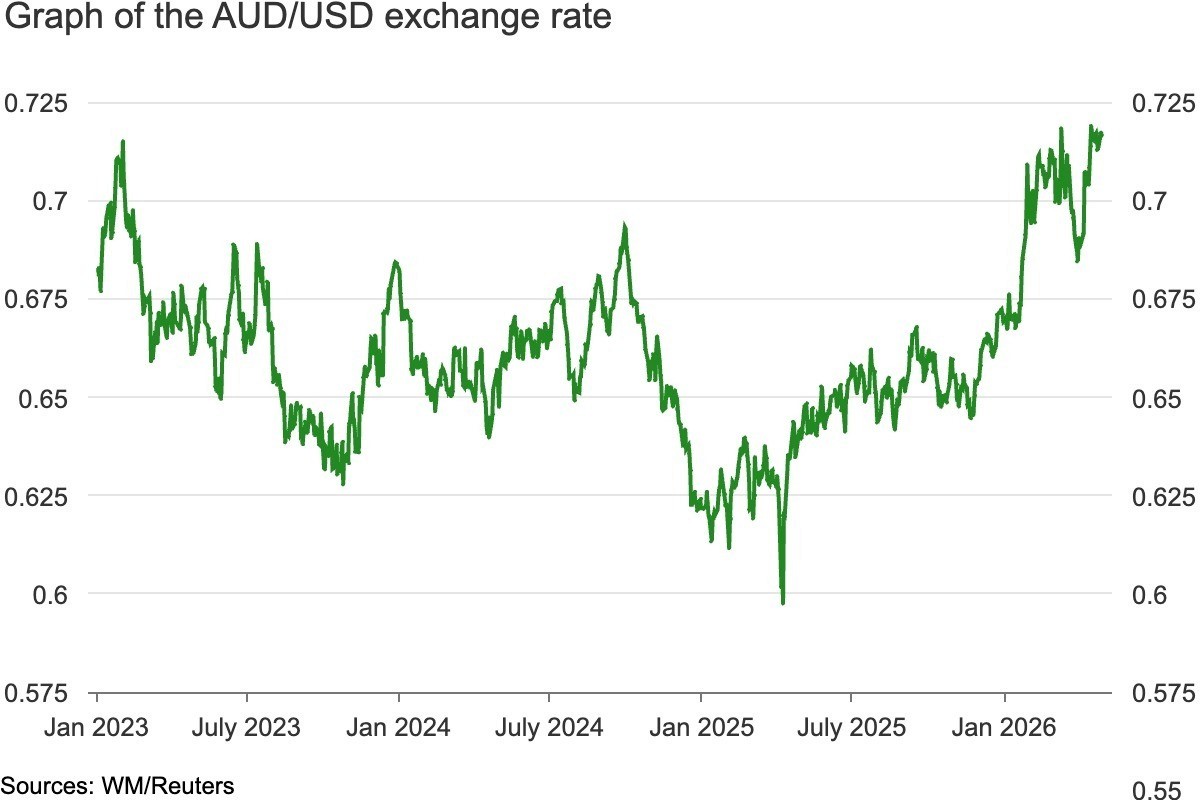
A stronger currency sounds good on paper, but it can work against you if your portfolio's currency exposure isn’t intentional enough. With the AUD at four-year highs and upcoming policy decisions likely to keep it elevated, now might be a good time to review your currency exposure and build a diversified portfolio.
Key Takeaways:
Big policy events ahead: The RBA is convening next week and the Commonwealth Budget will come on 12 May. Expect volatility and position for opportunity.
Inflation challenging: Latest inflation reading remains above the RBA's 2–3% target band, meaning another hike is on the table in the RBA May meeting.
AUD at four-year highs – and could be propped higher still by RBA hikes. Good news for importers but a headwind for exporters and anyone holding unhedged international assets. Now might be a good time to review your FX exposure.
Australian futures markets are currently pricing in another hike, with close attention likely to be paid to any forward guidance the RBA provides for the rest of the year.
Inflation, Policy, and the AUD
Currency markets are heavily influenced by monetary policy. Higher interest rates tend to attract foreign capital, which strengthens the currency. To contain inflation, the RBA became the first major developed-market central bank to hike rates in 2026 – and the recent inflation figure suggests that the fight is far from over.
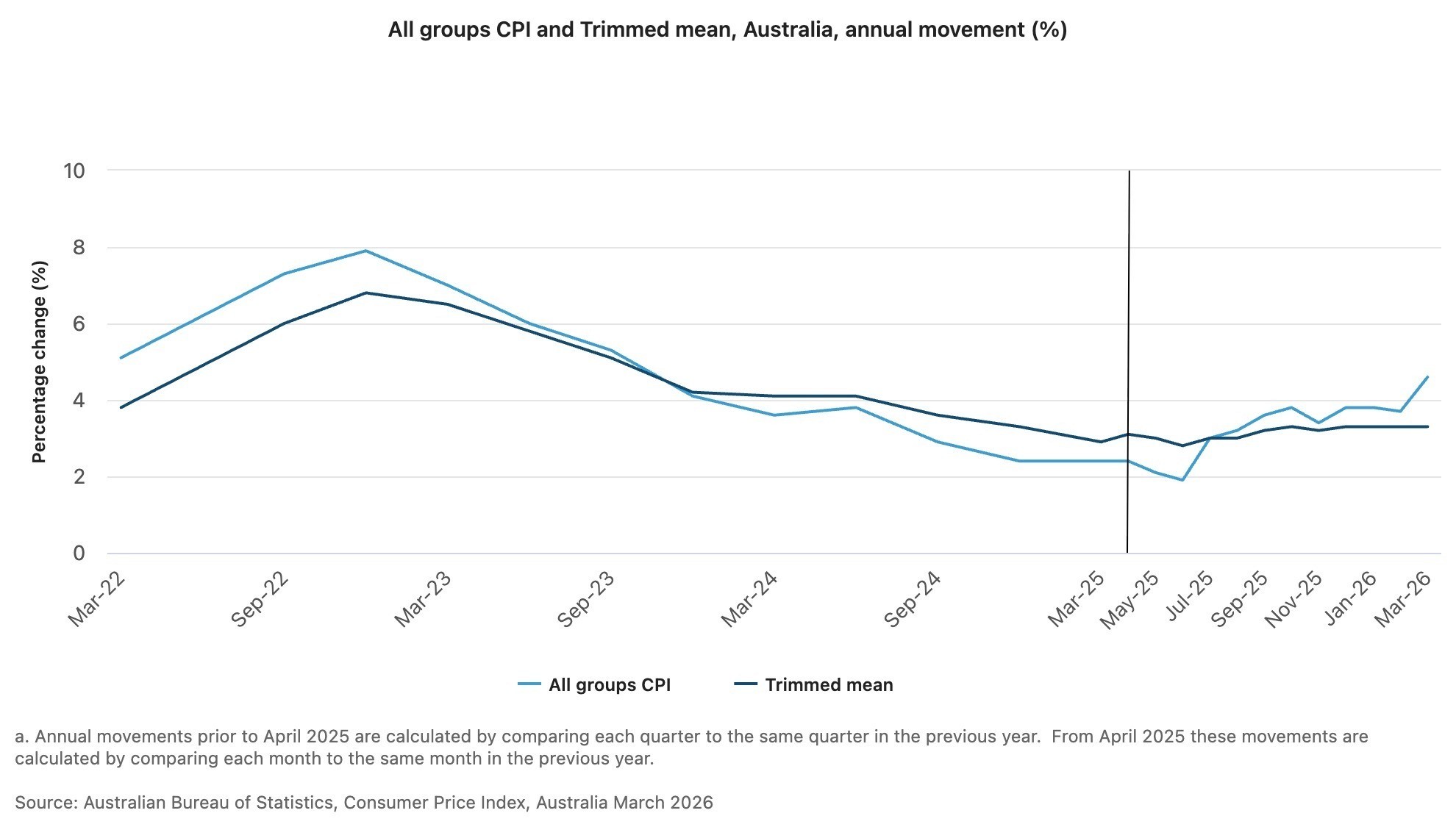
On Wednesday, the RBA's preferred inflation gauge (the trimmed mean CPI, which removes near-term volatility to show less “noisy” long-term trends)came in at 3.3% for Q1. While unchanged from the prior monthly reading, this sits firmly above the central bank’s 2–3% target band.
This means the RBA could hike again at its next board meeting on 4–5 May, having already delivered two 25bp rate hikes in 2026 (lifting the cash rate to 4.10%).
Australian futures markets are currently pricing in another hike, with close attention likely to be paid to any forward guidance the RBA provides for the rest of the year.
After the RBA decision, attention turns to Treasurer Jim Chalmers' Budget on 12 May. Pre-Budget commentary has flagged a productivity package, a savings package, and the possibility of reforms touching capital gains and superannuation settings. A substantial cost-of-living package has the potential to complicate the inflation outlook, potentially keeping rates higher for longer.
What This Means for the AUD
The currency is sensitive to exactly this dynamic. Australian rates staying higher for longer — with the US Federal Reserve staying put at this week's FOMC meeting — would narrow the interest rate differential in the AUD's favour. Combine that with elevated commodity prices and an unresolved global conflict keeping resource demand supported, and you have the backdrop that has driven the AUD's steady climb this year.
What it Means for Your Portfolio
A rising AUD could be good news or bad news for you, depending on what you own.
For ASX-listed exporters — particularly resource companies — a higher AUD compresses the Australian dollar value of their USD-denominated revenues at reporting time, even if underlying business performance is unchanged. That said, many of these companies are also benefiting from elevated commodity prices, which can offset the currency drag. Domestically focused businesses are largely insulated, and net importers may actually benefit as their input costs fall in AUD terms.
The less obvious impact is on investors who invest in US stocks directly. A rising AUD reduces the AUD value of unhedged USD holdings, even when the US share price is flat or rising. If your US position is up 5% in USD terms but the AUD has appreciated 7% against the USD, your AUD return is negative. The price chart looks fine; your brokerage statement tells a different story.
The good news is that you don’t have to choose between staying invested internationally and managing currency risk. Currency-hedged ETFs – often identifiable by an “H” in the ticker – allow you to hold global assets while largely removing AUD/USD volatility from the equation.
Neither approach is universally better — it depends on your currency outlook and time horizon — but it's worth knowing which one you hold and why — particularly during periods of significant currency movement.
ASX: VGAD (Hedged)
VGAD is an Australian-listed ETF from Vanguard Investments Australia that gives you exposure to global developed market shares (excluding Australia) but with currency hedging back to AUD.
ASX: IHVV (Hedged)
IHVV from BlackRock tracks the S&P 500, but hedged back to AUD. You are buying the top 500 US companies without currency swings affecting your returns.
ASX: FHNG (Hedged)
FHNG by Global X is very different from both VGAD and IHVV in that it is not a broad market, rather a high-conviction, concentrated US tech growth play that is also currency hedged to AUD reducing currency risk.
ASX: HEUR (Hedged)
HEUR by BetaShares is somewhat of a niche ETF in that it is a currency-hedged Europe-only play, not global and not US focused. You are investing in Europe’s biggest global companies without the currency risk, as it removes EURO to AUD volatility.
ASX: GHLD (Hedged) – Global X
GHLD by Global X is different again in that is not equities rather a pure gold ETF that is currency hedged. It invests directly in physical gold bullion, with 100% gold exposure and hedged to AUD removing USD-AUD currency risk.
The Bottom Line
Currency forecasting is notoriously difficult, and markets rarely move in straight lines. The more useful exercise for investors isn't trying to call the next move in AUD/USD — it's understanding where currency exposure already sits in your portfolio, whether that exposure is intentional, and how the current macro environment affects it. In a period where rates, inflation, and the currency are all in motion at once, that kind of clarity can matter more than getting the macro call exactly right.
Important disclaimer: SelfWealth Pty Ltd ABN 52 154 324 428 (“Selfwealth”) (AFSL 421789). The information contained on this website is general in nature and does not take into account your personal situation. You should consider whether the information is appropriate to your needs, and where appropriate, seek professional advice from a financial adviser and/or accountant. Taxation, legal and other matters referred to on this website are of a general nature only and should not be relied upon in place of appropriate professional advice. You should obtain the relevant Product Disclosure Statement for any product mentioned and consider its contents before making any decision.
Most Recent Articles