Rob Wilson, CFA, Director of Investment Strategy
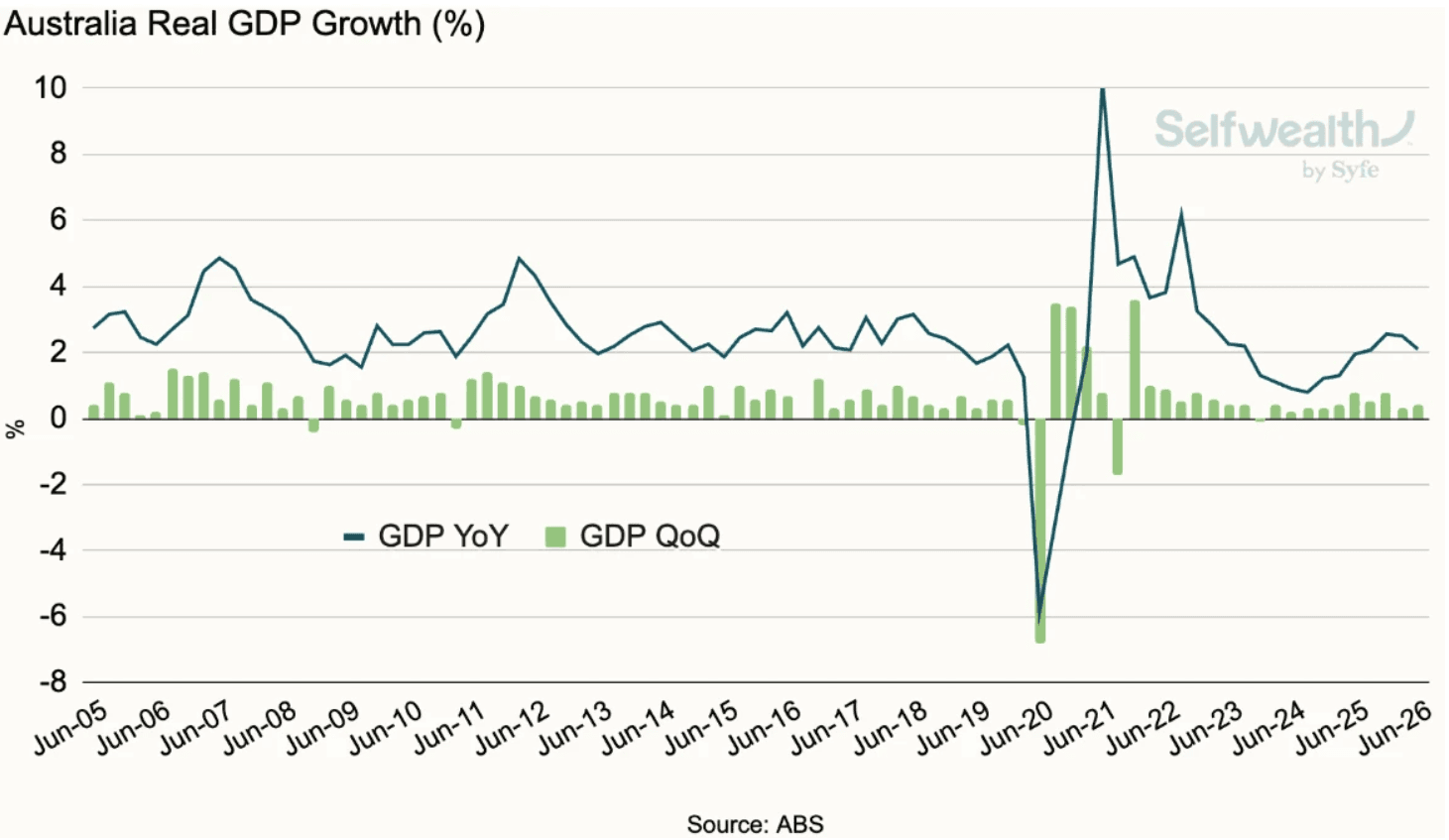
Australia’s June-quarter growth figures landed Wednesday morning. Headline numbers were positive, though the annual rate slowed from prior quarters.
Look closer, and the economy has been leaning on an increasingly narrow base for its growth over the past couple of quarters, driven largely by data-centre investment. Here is the quick read, and what else to watch this week.
Key Takeaways
Growth is positive, but it is narrow. GDP rose 0.4% in the June quarter and 2.1% over the year, yet the gains are increasingly concentrated rather than broad-based.
Data centres are doing the heavy lifting. Business investment has been propped up by data-centre spending, more than 10% higher over the year, even as mining capex fell.
The consumer is sitting out. Household spending was positive but potentially flattered by one-offs, with underlying discretionary spending relatively flat.
Unemployment has climbed to 4.5%. July’s jobs report showed employment falling and the jobless rate hitting a post-COVID high, cooling the labour market and all but ruling out another RBA rate hike this month.
Australia’s Economy Grew 0.4% in the June Quarter
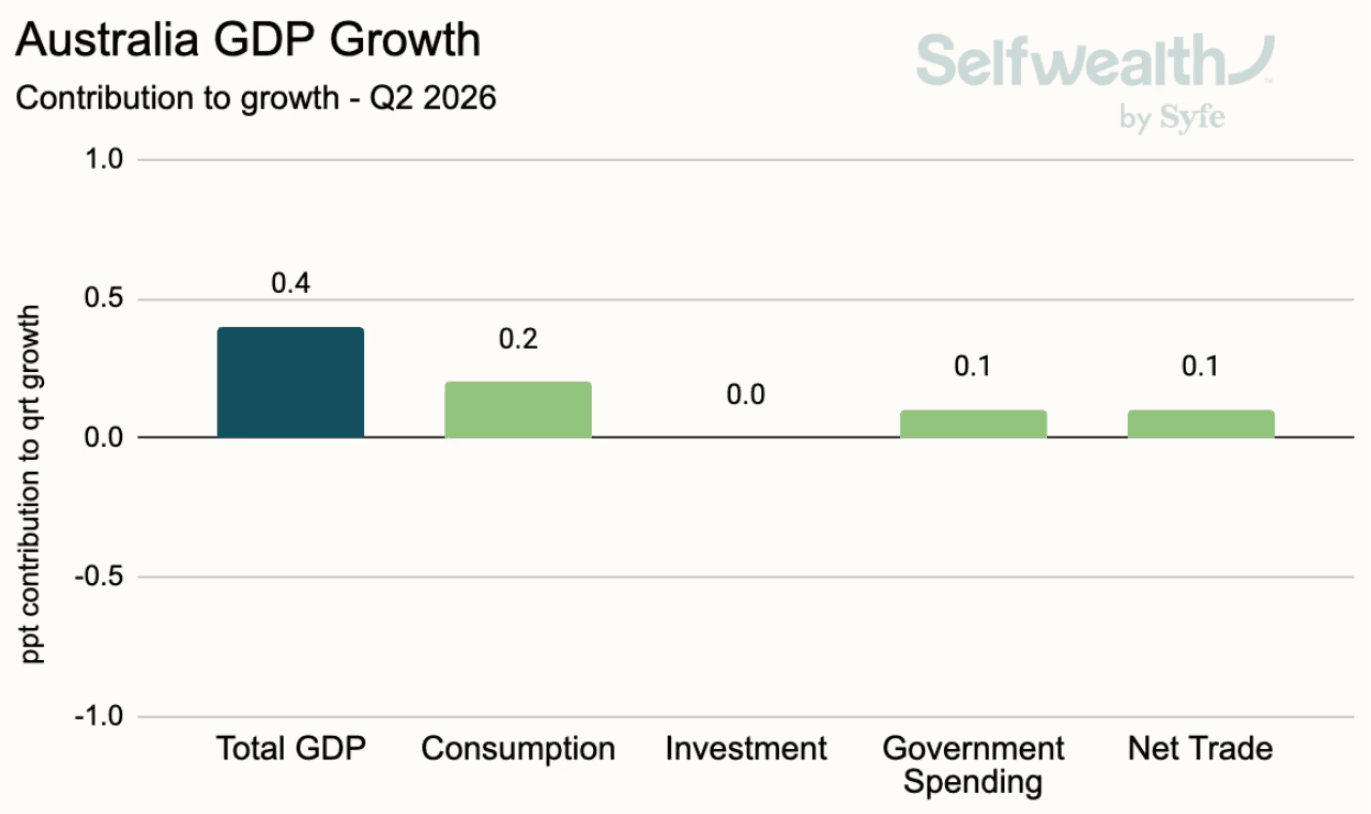
The economy expanded 0.4% in the June quarter, leaving annual growth at 2.1%, slower than the 2.5% of the prior quarter. Positive growth is a continued good sign for the economy, but the slower rate will be an ongoing watchpoint for the RBA, which is already seeing rising unemployment and inflation still above target.
Data Centres Are Boosting Growth
Looking into the data, two threads stand out.
Business Investment Up 10% as Mining Capex Falls
First, business investment has been propped up by data centres — machinery and equipment early in the year, shifting to construction (which does more for the local economy) in the June quarter. Business investment was more than 10% higher over the year, even as mining capex fell.
The Consumer Is Sitting Out
Second, the consumer isn’t really participating: household spending was positive but flattered by one-offs — expiring energy rebates, then a surge in EV purchases — while underlying discretionary spending stayed flat and households kept saving, with the saving ratio at 6.5%.
Unemployment Hits a Post-COVID High of 4.5%
The soft picture chimes with other recent data, too: unemployment drifted up to 4.5% in July, its highest in the post-COVID era, which has all but ruled out another RBA rate rise this month.
What Narrow Growth Means for Investors
Why does it matter for investors? An economy leaning on a handful of big projects — and increasingly on the spending plans of a few global technology companies building data centres here — is more fragile than one with broad-based demand. The flip side: data centres and renewables could become a genuine new engine of growth, helping to diversify the economy beyond mining.
Looking Ahead
The next fortnight belongs to the central banks. The immediate focus is offshore, where Friday's US jobs report and next week's inflation figures will shape whether the Federal Reserve holds or hikes on 15–16 September. At home, the softer run of data (modest growth and rising unemployment) has eased the pressure on the RBA, which looks set to stay on hold when it meets late this month. The bigger question the June quarter leaves behind is whether Australia's narrow, project-led growth can broaden out from here.
Key Dates to Watch
US jobs report — 4 September : After US employers unexpectedly cut jobs in July, another soft reading would strengthen the case for the Federal Reserve to hold rates.
US inflation (August CPI) — 11 September: The last big inflation read before the Fed’s 15–16 September decision — and, with a hawkish new chair keeping a hike on the table, potentially the number that settles the debate.
Australian consumer & business confidence — next week: The monthly NAB and Westpac surveys, a timely gauge of how households and firms are faring after the softer growth and jobs figures.
Oil prices — ongoing: Crude remains elevated as the conflict drags on, keeping upward pressure on the global inflation outlook.
Important disclaimer: SelfWealth Pty Ltd ABN 52 154 324 428 (“Selfwealth”) (AFSL 421789). The information contained on this website is general in nature and does not take into account your personal situation. You should consider whether the information is appropriate to your needs, and where appropriate, seek professional advice from a financial adviser and/or accountant. Taxation, legal and other matters referred to on this website are of a general nature only and should not be relied upon in place of appropriate professional advice. You should obtain the relevant Product Disclosure Statement for any product mentioned and consider its contents before making any decision.
Most Recent Articles