
Rob Wilson, CFA, Director of Investment Strategy
The US Federal Reserve raised interest rates last week for the first time since 2023, and signalled another increase may follow before year-end.
Attention now turns to the RBA, which decides next week, and after comments from Governor Michele Bullock, a rate rise now looks likely despite an uptick in the unemployment rate. Here is this week’s wrap.
Key Takeaways
The Fed raised rates. Last week, the Federal Reserve lifted its benchmark rate by a quarter-point to 3.75–4.0%. It was its first hike since 2023, and most officials expect one more this year.
Equity markets took it in their stride. Despite the hike, US shares held up over last week. The S&P 500 was relatively flat and the Nasdaq rose on the week.
Other central banks have moved too. The European Central Bank raised rates earlier in the month and the Bank of Japan lifted its rate to a 31-year high, while the Bank of England held but indicated a bias towards a hike in the future.
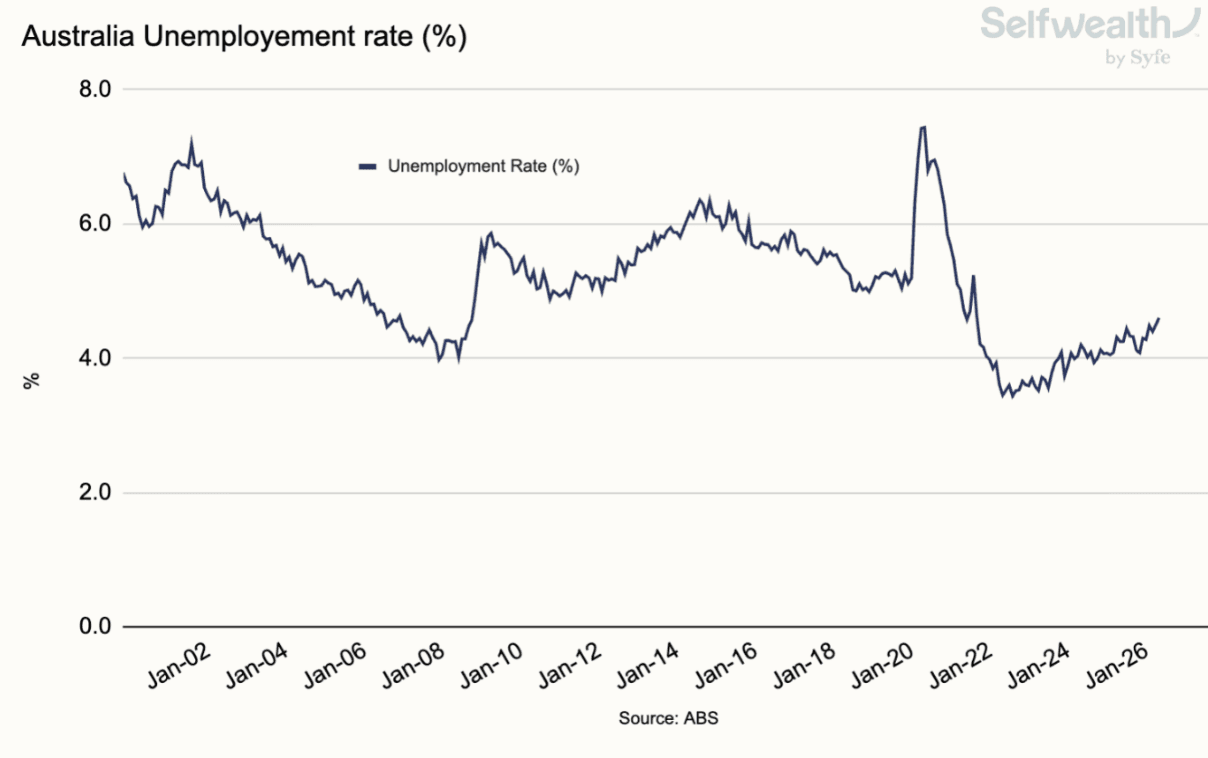
An RBA hike now looks likely. After Governor Bullock warned that upside inflation risks are ‘materialising’, markets are pricing a rise to 4.60% at next week’s meeting, despite the unemployment rate reaching its highest level since 2021.
The Fed Raises Rates for the First Time Since 2023
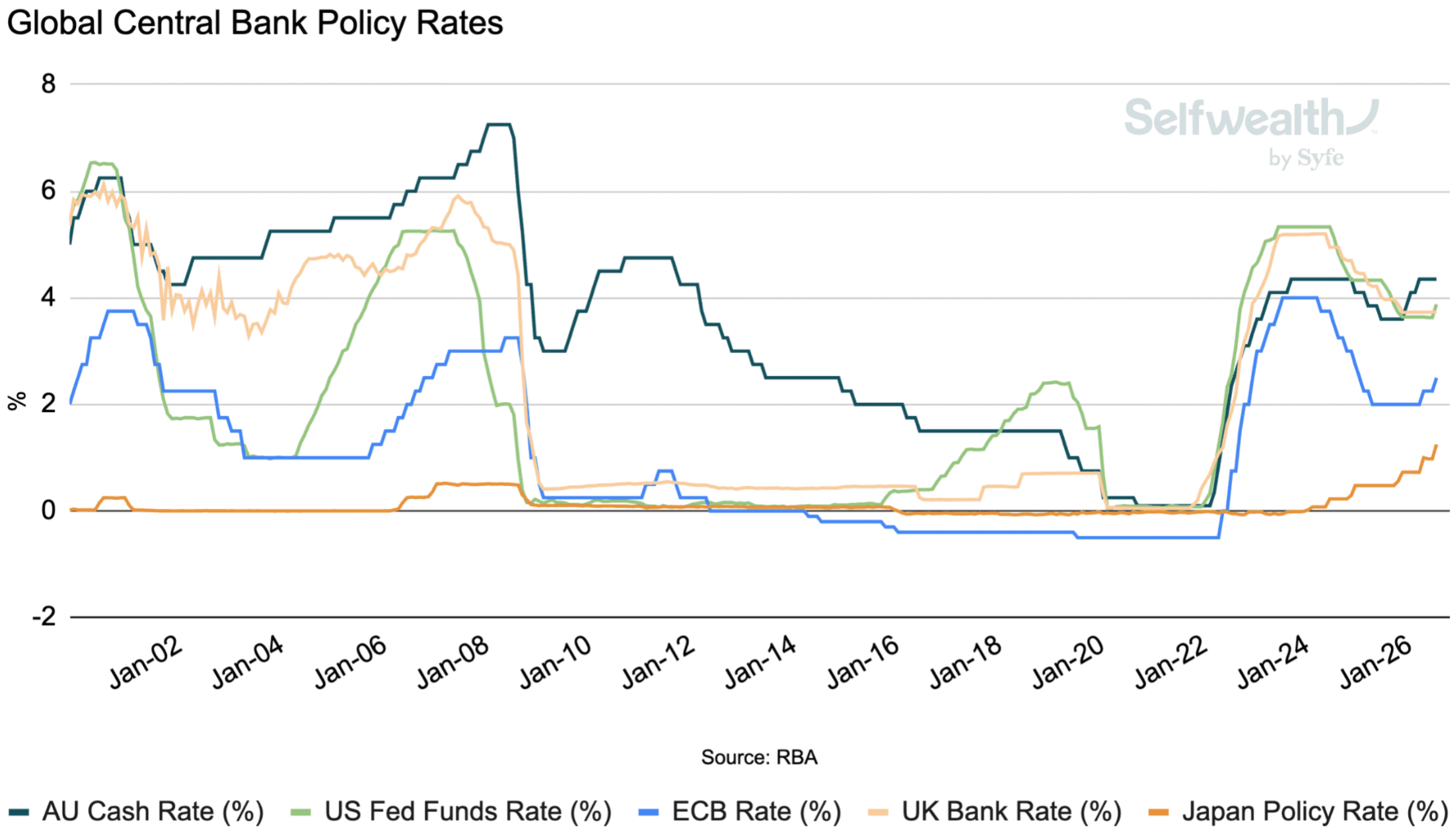
Last week the Federal Reserve lifted its benchmark interest rate to 3.75–4.0%. It was the Fed’s first rate rise since 2023, and the vote was unanimous. Chair Kevin Warsh said three things had changed since the previous meeting: the economy had strengthened, inflation hadn’t slowed, and geopolitical tensions had intensified. The Fed’s updated projections showed most officials expect one more increase before the end of the year, though none are pencilled in for 2027. In short, the central bank has moved from watching inflation to actively leaning against it.
Global Central Banks Are Tightening
Last week’s Federal Reserve hike to 3.75–4.0% was the first since 2023, and the vote was unanimous. The Fed’s updated projections showed most officials expect one more increase before the end of the year, though none are pencilled in for 2027. In short, the central bank has moved from watching inflation to actively leaning against it.
The Fed was not alone. The Bank of Japan raised its policy rate to 1.25%, its highest in more than three decades. The European Central Bank had already raised its key rate to 2.50% earlier in the month, while the Bank of England held steady at 3.75%, but with three of its nine members voting for a hike. Together with the Fed’s move, it points to a broad tilt among the major central banks towards keeping rates higher..
An RBA Hike Now Looks Likely After Governor Bullock’s Comments
There were two key strands to the local news this week. First, Governor Michele Bullock made clearly hawkish comments, saying the upside inflation risks the RBA flagged in August are now ‘materialising’, and warning that global supply shocks, from wars to higher energy costs, must not be allowed to become ‘embedded’ in Australian prices. Second, Thursday’s jobs report showed the unemployment rate continuing to rise to 4.6%, the highest since late 2021. Markets now price a rate rise at next week’s 28–29 September meeting, which would lift the cash rate from 4.35% to 4.60%.
US Shares Hold Firm Despite the Rising Central Bank Rates
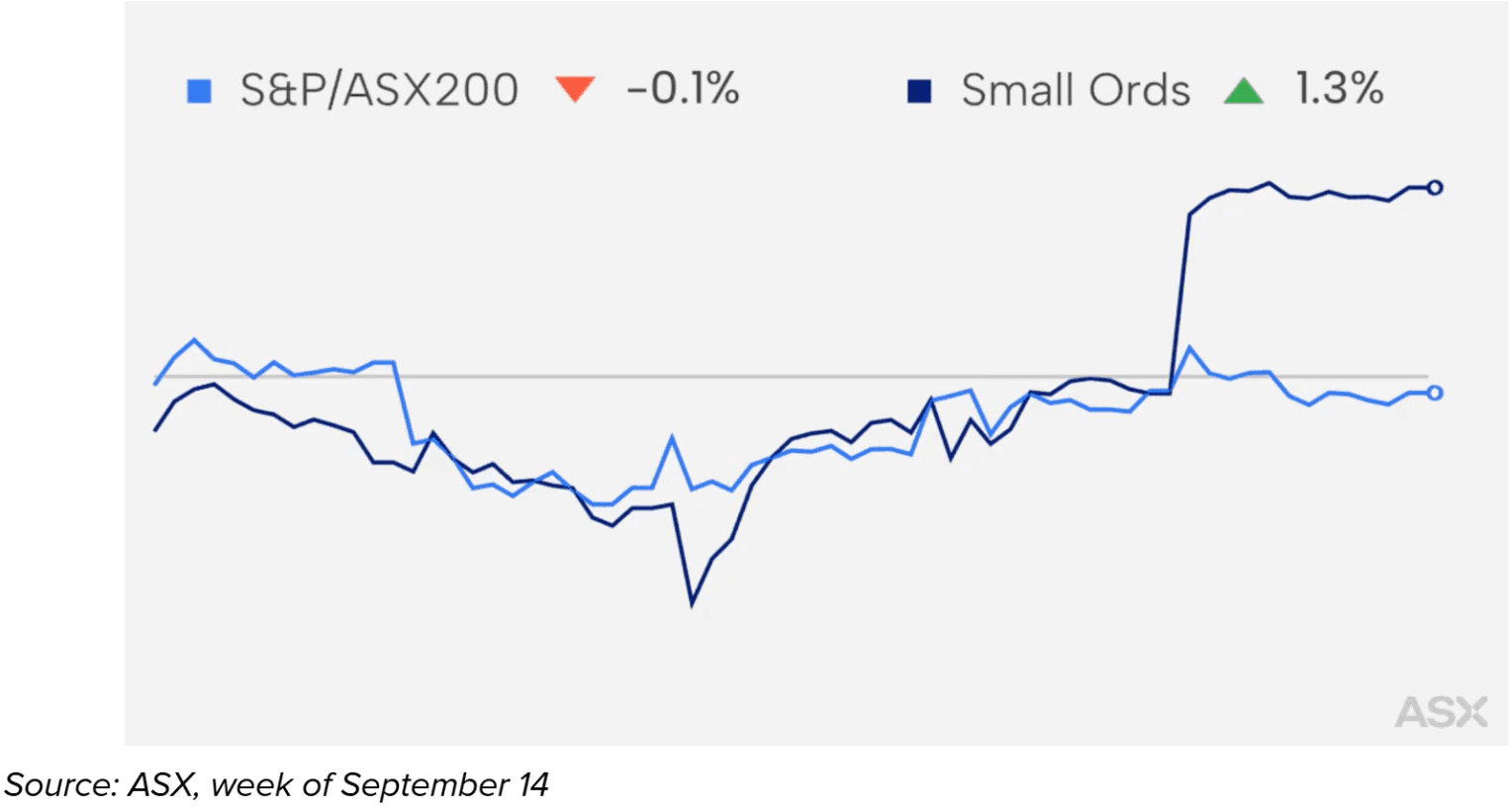
Although the Fed raised rates and flagged another increase, US shares held up last week. The S&P 500 finished roughly flat, while the tech-heavy Nasdaq rose. The likely reason for a positive market reaction was most Fed officials seeing just one more rate move this year rather than an extended campaign, which reassured investors and gave some relief to rate-sensitive technology stocks. Beneath the surface, chipmakers rose while some of the big AI companies eased, as investors weighed the heavy borrowing they are taking on to fund data centres. In Australia, the ASX 200 slipped 0.1% last week, with small caps outperforming. Yields, however, have kept rising as markets factor in higher rates, with the US 10-year back near 2007 highs.
Looking Ahead
It's a big week for Australian rates. With this week’s jobs data now in, the focus shifts to the RBA’s decision next Tuesday, 29 September, followed by the August inflation figures the day after. Offshore, US inflation data (the Fed’s preferred measure) is due next week, giving a first read on price pressures since the Fed’s move. Oil and the Middle East remain in the background, still feeding into the inflation picture.
Key Dates to Watch
RBA decision — 29 September: Markets almost fully price a hike to 4.60%
Australian inflation (August CPI) — 30 September: The next big local price read, landing the day after the RBA decides.
US inflation (PCE) — 30 September: The Fed’s preferred inflation gauge, the first reading since its rate hike.
Oil & the Middle East — ongoing: Crude near US$100 continues to feed into fuel prices and the inflation outlook.
Important disclaimer: SelfWealth Pty Ltd ABN 52 154 324 428 (“Selfwealth”) (AFSL 421789). The information contained on this website is general in nature and does not take into account your personal situation. You should consider whether the information is appropriate to your needs, and where appropriate, seek professional advice from a financial adviser and/or accountant. Taxation, legal and other matters referred to on this website are of a general nature only and should not be relied upon in place of appropriate professional advice. You should obtain the relevant Product Disclosure Statement for any product mentioned and consider its contents before making any decision.
Most Recent Articles