Rob Wilson, CFA, Director of Investment Strategy
US inflation cooled for a second month running, easing fears that the Federal Reserve will need to raise rates next month and lifting shares to record highs. The relief has proved short-lived, though, as oil has pushed higher and bond yields have climbed to multi-year highs, already nudging shares back from those peaks. Closer to home, it is reporting season with the major banks lagging.
Key Takeaways
US inflation cooled again. Consumer prices rose 3.4% over the year in July, down from 3.5%, with core inflation easing to 2.5% (its lowest in five months).
A September Fed hike looks less likely. Combined with the recent weak jobs report, the softer inflation cut the odds of a US rate rise next month to around one in three, from a coin-flip a week earlier.
Bond yields are spoiling the party. Government bond yields have climbed to multi-year highs in a selloff spanning the US, Europe and Japan. Shares have pulled back from their record highs.
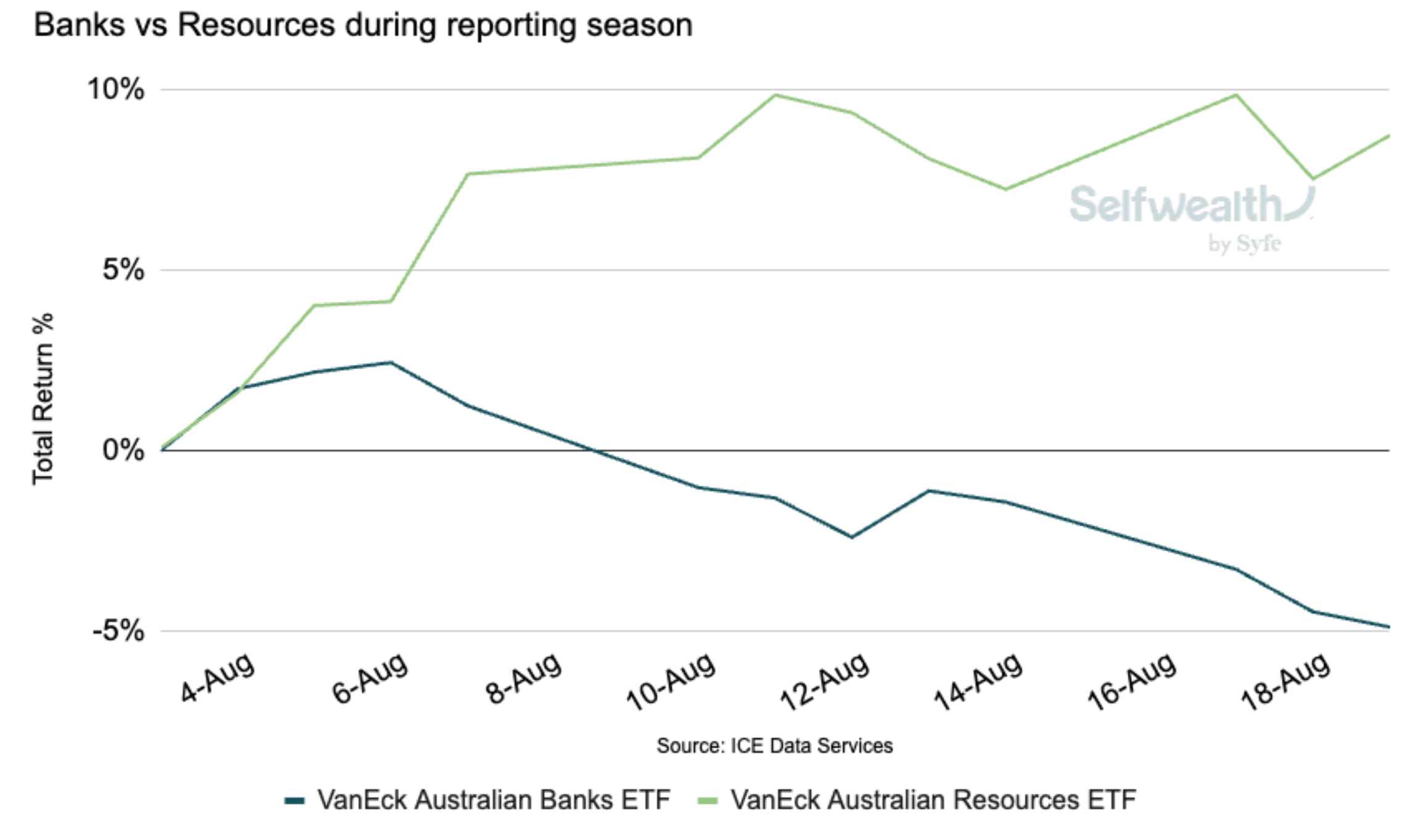
The resources sector is stealing the show at home. As the ASX reporting season rolls on, strong results from the big miners such as BHP have delivered strong results well while banks lagged.
US Inflation Cools to 3.4%, Easing Pressure on the Fed
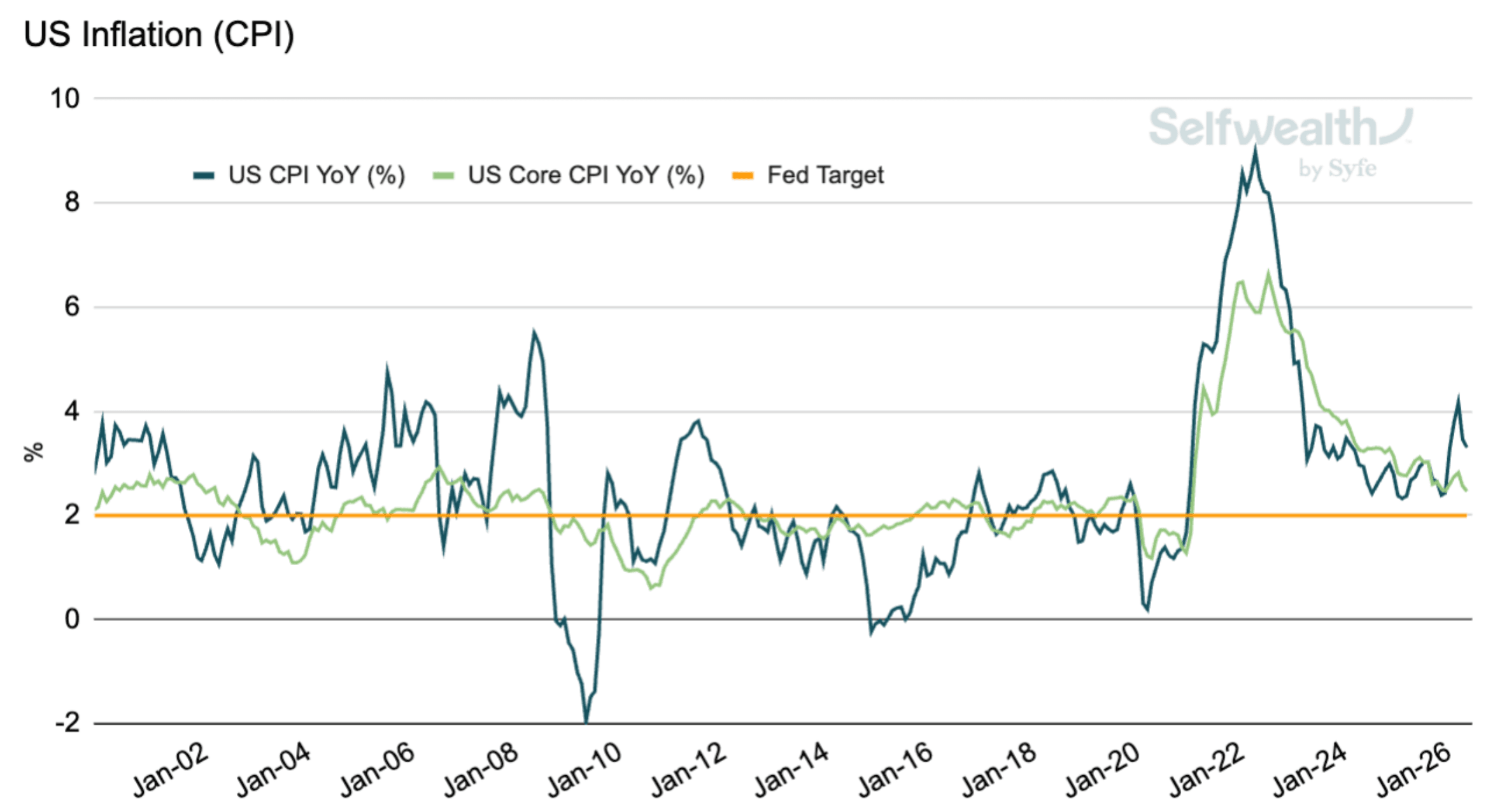
Last week, US Consumer prices rose just 0.1% over the month. This left the annual rate at 3.4%, down from 3.5%, while the core measure, which strips out volatile food and energy, eased to 2.5%, its lowest in five months. Coming after the previous week’s weak jobs report, lower inflation has reduced the market odds of a possible US September rate hike. Markets now put the odds of a US rate rise next month at around one in three, down from a coin-flip beforehand.
Rising Bond Yields Pull Shares Back From Record Highs
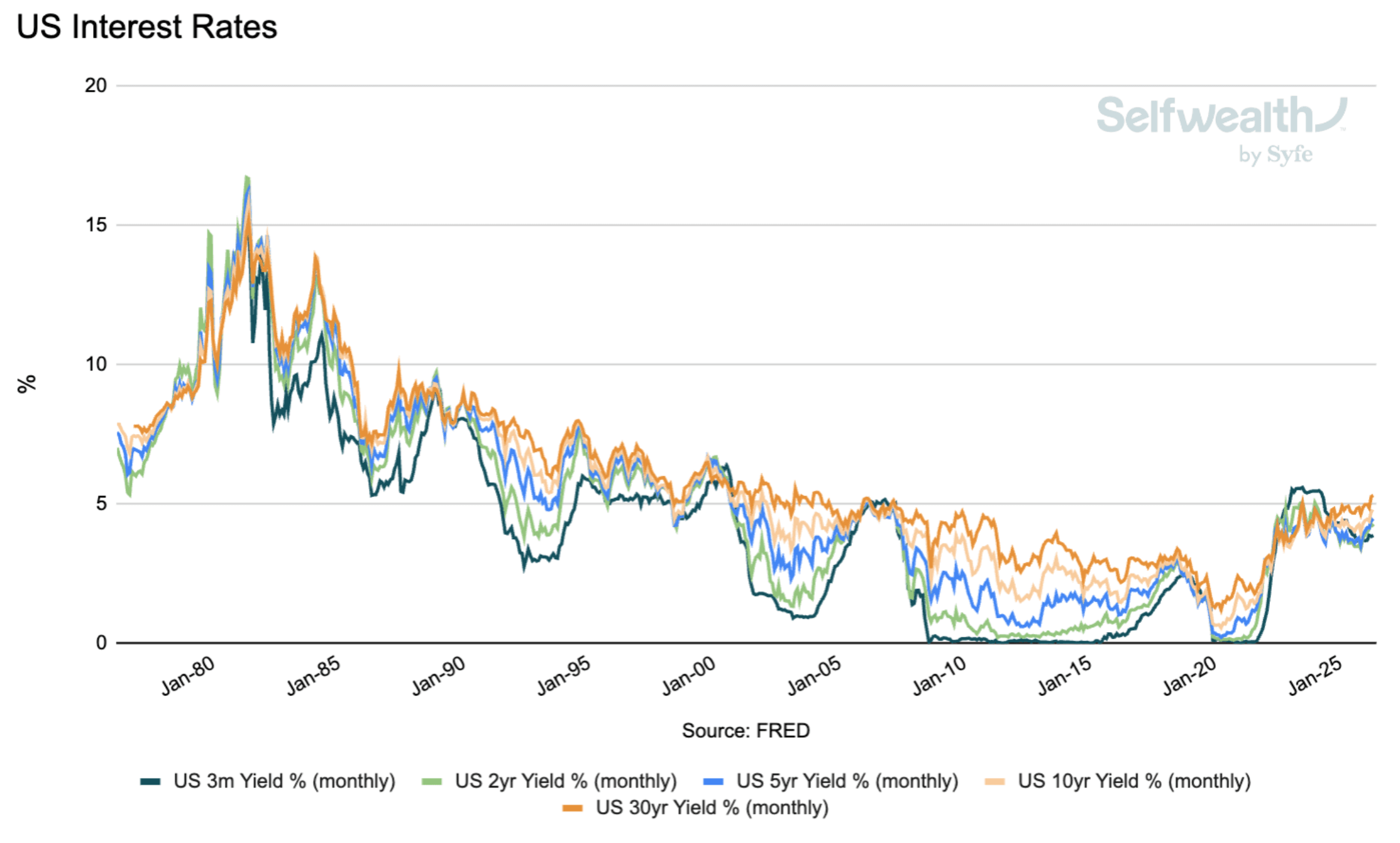
The bigger market story this week has been in bonds. Government bond yields have climbed to multi-year highs, with the US 30-year yield hitting its highest level in 19 years and the 10-year its highest since early 2025. This is not just a US story: yields on long-dated German, French and Japanese government debt have also pushed to highs. That matters because higher yields make bonds more competitive with shares and push up borrowing costs across the economy. US shares have pulled back from the record highs they reached just after the inflation data.
Why Bond Supply and Oil Are Driving Yields Higher
A few aspects are potentially behind the higher rates move. First, supply: companies and governments are issuing bonds in size, potentially funding AI infrastructure. Second, inflation risk, where oil is the swing factor. Brent is back over US$90 a barrel as the conflict with Iran drags on and the Strait of Hormuz stays disrupted. Cheaper petrol was one of the main reasons inflation cooled in July, so if crude stays at these levels that tailwind reverses and feeds into the next set of underlying inflation readings.
Resources Steal the Show This Reporting Season
Closer to home, it is reporting season and the big miners have strong numbers, powered by higher commodity prices, while major banks have sold off amid a softening housing market and pressure on their lending margins. Much of the miners’ strength traces back to a familiar theme, the global build-out of AI infrastructure, which needs vast amounts of copper for wiring and power. It means some of Australia’s biggest links to the AI boom, for now, are not through technology stocks, but through the miners that supply the raw materials. Healthcare giant CSL was another talking point: its shares jumped sharply, even after it reported a rare annual loss following some write-downs, as investors chose to focus on a brighter outlook for the year ahead rather than the realized earnings.
Looking Ahead
Beyond this week’s Australian unemployment report, global investors are already looking to the end of the month, when Fed Chair Kevin Warsh speaks at the Jackson Hole symposium (27–29 August), however, true to his preference for keeping markets guessing, he may offer few firm hints. The bigger signpost is the next US inflation report on 11 September, just days before the Fed decides. Underpinning it all, oil and the Middle East remain the wildcard.
Key Dates to Watch
Australian employment (Labour Force) — 20 August: July’s employment report, the key test of whether the local labour market is softening as the RBA now expects.
Australian CPI — 26 August: The monthly inflation reading, another key indicator for the RBA.
Jackson Hole symposium — 27–29 August: Fed Chair Warsh’s speech, watched for any hint on the September rate decision.
US Federal Reserve — 15–16 September: Markets have a hike of around 1 in 3 chance, with oil the swing factor.
Important disclaimer: SelfWealth Pty Ltd ABN 52 154 324 428 (“Selfwealth”) (AFSL 421789). The information contained on this website is general in nature and does not take into account your personal situation. You should consider whether the information is appropriate to your needs, and where appropriate, seek professional advice from a financial adviser and/or accountant. Taxation, legal and other matters referred to on this website are of a general nature only and should not be relied upon in place of appropriate professional advice. You should obtain the relevant Product Disclosure Statement for any product mentioned and consider its contents before making any decision.
Most Recent Articles