
Potentially the biggest IPO in history Friday, 12 June
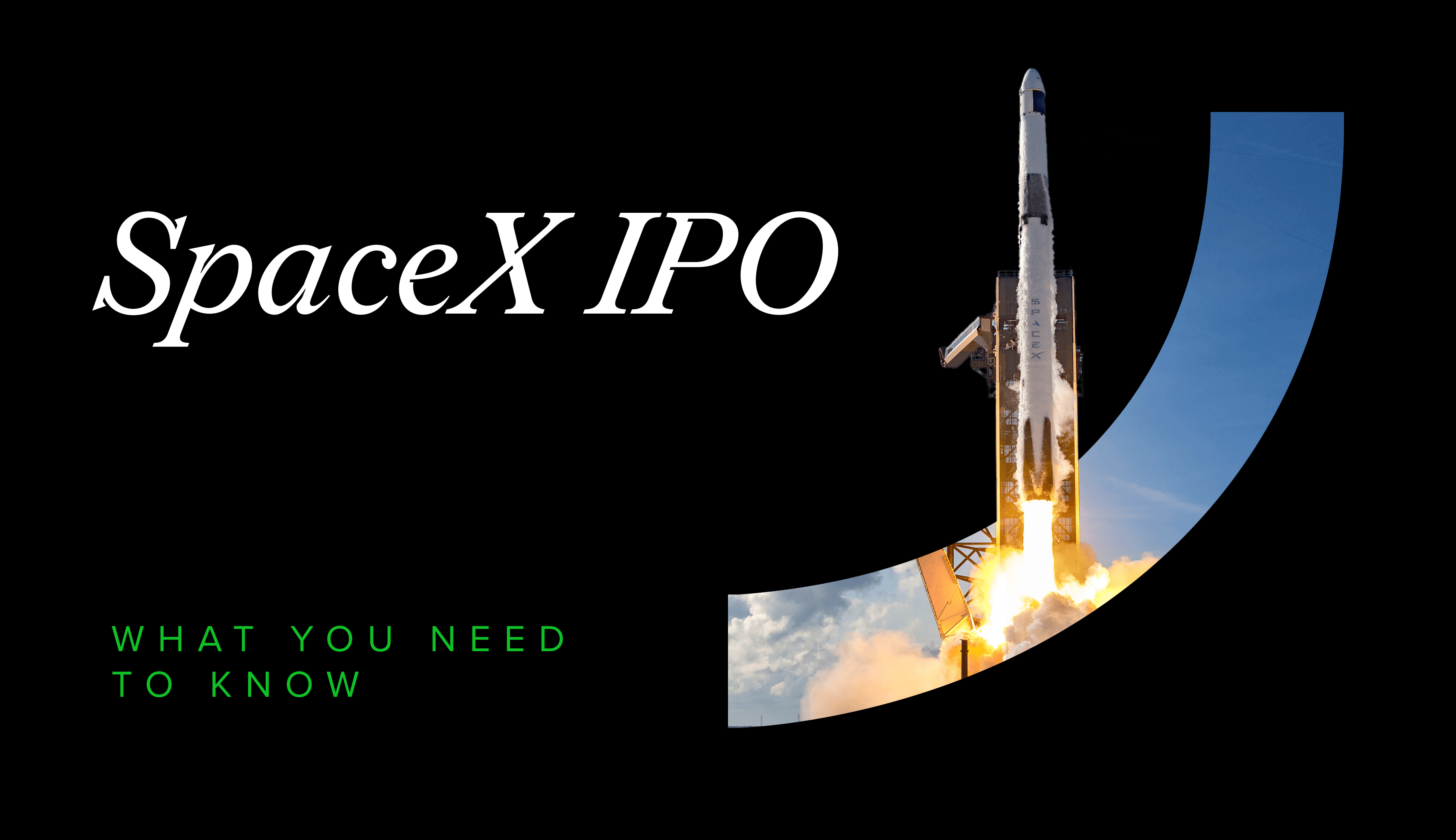
SpaceX is set to begin trading on the Nasdaq on Friday, 12 June 2026 (US time).
This is shaping up to be potentially the largest IPO in stock market history. SpaceX is targeting a raise of approximately US$75 billion at a valuation of around US$1.77 trillion. For comparison, the previous record was Saudi Aramco's 2019 IPO, which raised approximately US$29 billion.
What Is SpaceX?
Founded in 2002 by Elon Musk, SpaceX is a private American spaceflight, satellite internet and AI company headquartered in Starbase, Texas. Elon Musk will retain approximately 82.4% of voting power in the company even post-IPO. SpaceX operates across three business segments:
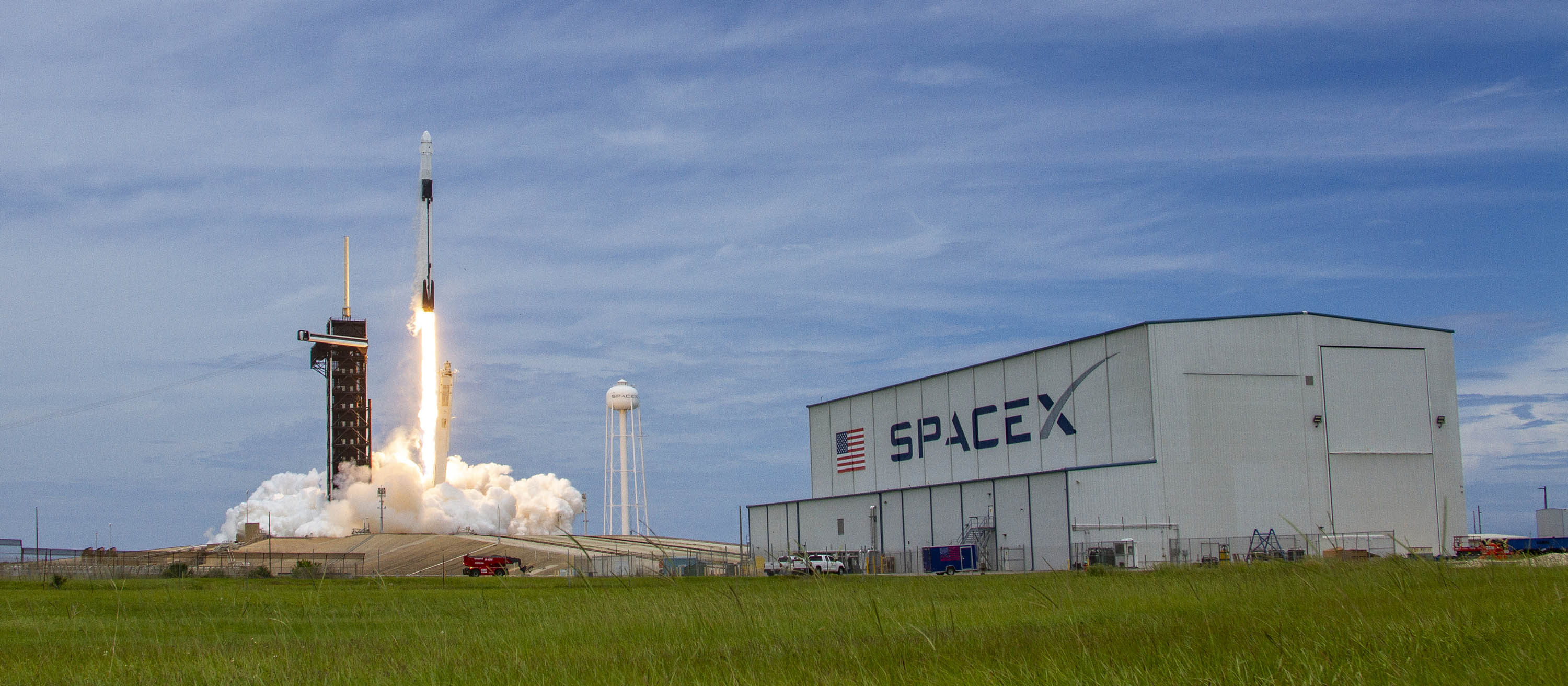
(Image: spacex.com)
Space: the rocket and launch business, including the reusable Falcon 9 and Falcon Heavy rockets and the Dragon spacecraft used for NASA crew and cargo missions. SpaceX has completed approximately 650 orbital launches.
Connectivity (Starlink): SpaceX's satellite internet service, delivered from a constellation of ~9,600 satellites in low Earth orbit to over 10 million subscribers across the world. Starlink is the financial engine of the company, generating much of its revenue.
AI: Following SpaceX's acquisition of Elon Musk's AI company xAI (known for its AI model Grok) in February 2026.
The company as a whole reported a net loss of US$4.9 billion in 2025, with significant xAI investment costs and development costs of its new Starship rocket.
Trading SpaceX on Selfwealth
SpaceX will trade on the Nasdaq under ticker SPCX. After it is publicly listed, SPCX can be bought and sold on Selfwealth like any other US that is listed on the Nasdaq or NYSE stock exchanges.
Important to note: We aim to make newly listed stocks available for market trading on the platform as quickly as possible after they begin trading on exchange. In some cases, shares from major listings will be ready to trade on Selfwealth soon after they debut on the exchange, while in others it may take a few additional days to complete the necessary checks and set-up. We work closely with our market partners and continuously monitor new listings to ensure they meet our standards.
A few practical notes:
Likely won’t be trading at market open: Based on historical Nasdaq behavior for high-profile IPOs, the symbol is not expected to open at the usual US 9:30 AM Eastern Time. The initial price discovery phase typically lasts several hours, often pushing the official opening cross into the late morning or early afternoon for US hours.
No extended hours trading on day one. Pre-market, post-market and overnight sessions will be disabled for SPCX on its first trading day.
Trading halts are possible. Nasdaq may pause trading in SPCX during initial price discovery; any pending orders will remain queued until the halt is lifted.
Selfwealth offers flat US$9.50 brokerage per trade (no matter the size), FX conversion at 60 basis points applied only when moving money in or out of your USD account, and access to over 5,000 US stocks and 3,000+ US ETFs.
In order to trade US stocks, clients must have a US trading account. Please see our page here for more details: Find out how US trading works on Selfwealth →
Newly Listed Stocks: What to Be Aware Of
Here is the SpaceX Prospectus filed with ASIC in full SpaceX Filing
IPO day trading can be volatile. A few things worth knowing:
History has lessons. Tesla — another Musk-led company — waited nearly 10 years after its IPO before joining the S&P 500, and its share price was extremely volatile along the way. Virgin Galactic (a different space company) surged during the 2021 meme-stock period and then fell more than 98% from its peak.
Price swings are normal and can be large. There's no established trading range, no earnings history, and no prior price chart for the market to anchor to. Expect wide bid-ask spreads and rapid price moves, especially at the open.
Most first-day "pop" goes to institutional investors, not retail. Some research has shown average first-day gains typically accrue to large institutions allocated shares at the IPO price before trading begins, not retail buyers who purchase on the open market.
The free float is tiny at launch. Only a small fraction of the company's total shares will be freely available to trade when the stock opens. "Free float" refers to the shares actually available for public trading — the remaining shares are held by Elon Musk, employees, early investors and other insiders, who have restrictions from selling immediately. A small float with high demand can amplify price swings in both directions.
Lock-up expiry adds future supply. Insiders are typically restricted from selling for a period post-IPO. When that lock-up expires, more shares enter the market — which can affect the share price at that point.
Don't Want to Pick the Stock? You Might End Up Owning SpaceX Through an ETF Anyway
If you'd prefer a passive approach, there's a good chance SpaceX will end up in your portfolio automatically if you already hold certain ETFs.
When a major company lists on a stock exchange, the big index providers (Nasdaq, MSCI, FTSE Russell, CRSP, S&P) review whether to add it to their indexes. Once added, every ETF that tracks that index will likely buy the stock as soon as possible to minimize their performance tracking.
Here's what the major index providers have said, and when SpaceX could realistically be included:
S&P 500 — not yet: On 4 June 2026, S&P Dow Jones Indices confirmed it will not change its eligibility requirements. Companies must have four consecutive quarters of positive GAAP net income and 12 months of trading history before being considered for the S&P 500. SpaceX reported a net loss of US$4.9 billion in 2025, so S&P 500 inclusion is unknown but likely at least mid-2027 away.
Nasdaq-100 (~15 trading days): Nasdaq now allows large newly-listed companies whose market cap ranks in the top 40 of the index to join within 15 trading days of listing. The announcement is made after trading day 10. SpaceX would comfortably rank in the top 40 at its targeted valuation.
MSCI Global Standard (~10 trading days): MSCI has had fast-track IPO inclusion rules since 2007 — these haven't been changed for SpaceX. Under its published methodology, large IPOs that clear MSCI's size thresholds are eligible after 10 trading days. MSCI has confirmed SpaceX is expected to clear these thresholds.
FTSE Russell (~5 trading days): Following a market consultation concluded on 26 May 2026, FTSE Russell introduced a new fast-entry rule: IPOs large enough to rank in the Russell Top 500 are added after the close of the fifth trading day.
CRSP (~5 trading days): CRSP, whose indexes are used by Vanguard for many of its US broad-market funds, applies no profitability test, and its published methodology confirms it fast-tracks qualifying IPOs into its indexes within 5 days of listing for companies of Small Cap size and above.
Nothing is guaranteed. Index inclusion is subject to each provider's rules at the time and their final assessment at listing. Always check the relevant index methodology.
What This Means for Australian ETF Holders
Many investors already hold ETFs that could automatically include SpaceX in the weeks after its listing. For example:
NDQ - BetaShares Nasdaq 100 ETF tracks the Nasdaq-100 Index. Based on Nasdaq's fast-entry rules, SpaceX is likely to be added to the Nasdaq-100 within approximately 15 trading days of listing — which would automatically flow into NDQ at its next rebalance.
VGS - Vanguard MSCI Index International Shares ETF tracks the MSCI World ex-Australia Index. Given MSCI's existing 10-trading-day fast-track rules and SpaceX's expected size, VGS could be holding SpaceX within a few weeks of listing.
Meanwhile, IVV — iShares Core S&P 500 ETF tracks the S&P 500. Given S&P's confirmed decision to maintain its profitability and seasoning requirements, IVV is unlikely to hold SpaceX until at least mid-2027.
This is not an exhaustive list. The weight SpaceX receives in any ETF will depend on its market cap and free float at the time of inclusion relative to the index's other constituents. Always check the ETF's PDS and benchmark index methodology for details specific to that fund.
Important disclaimer: SelfWealth Pty Ltd ABN 52 154 324 428 (“Selfwealth”) (AFSL 421789). The information contained on this website is general in nature and does not take into account your personal situation. You should consider whether the information is appropriate to your needs, and where appropriate, seek professional advice from a financial adviser and/or accountant. Taxation, legal and other matters referred to on this website are of a general nature only and should not be relied upon in place of appropriate professional advice. You should obtain the relevant Product Disclosure Statement for any product mentioned and consider its contents before making any decision.
Most Recent Articles